Seminar in Psychometrics
A Generalized Additive Partial-Mastery Cognitive Diagnosis Model
Speaker: Camilo Cardenas Hurtado, London School of Economics and Political Science
Date and time: Thursday, March 12, 2026 (16:00 PM CET)
Place ICS CAS room 318, Pod Vodárenskou věží 2, Prague 8, also on Zoom.
Zoom: 949 6153 1717, passcode: 646735.
Cognitive diagnosis models (CDMs) are restricted latent class models widely used for measuring attributes of interest in diagnostic assessments in education, psychology, biomedical sciences, and related fields. Partial-mastery CDMs (PM-CDMs) are an important extension of CDMs. They model individuals' status for each attribute to be continuous for measuring the partial mastery level, which relaxes the restrictive discrete-attribute assumption of classical CDMs. As a result, PM-CDMs often yield better fits for real-world data and refined measurement of the substantive attributes of interest. However, these models inherit some strong parametric assumptions from the traditional CDMs about the item response functions and, thus, still suffer from a significant risk of model misspecification. In this talk we propose a generalized additive PM-CDM (GaPM-CDM) that substantially relaxes the parametric assumptions of PM-CDMs. This proposal leverages model parsimony and interpretability by modeling each item response function as a mixture of nonparametric monotone functions of attributes. A method for the estimation of GaPM-CDM is developed, which combines the marginal maximum likelihood estimator with a sieve approximation of the nonparametric functions. The new model is applicable under both confirmatory and exploratory settings, depending on whether prior knowledge is available about the relationship between observed variables and attributes. The proposed method is applied to two measurement problems from educational testing and healthcare research, respectively, and further evaluated and compared with PM-CDMs through extensive simulation studies. This is joint work with Yunxiao Chen and Irini Moustaki.
References:Cárdenas-Hurtado, C., Chen, Y., & Moustaki, I. (2025). A Generalized Additive Partial-Mastery Cognitive Diagnosis Model. arXiv preprint arXiv:2511.20191.
Shang, Z., Erosheva, E., Xu, G. (2021). Partial-Mastery Cognitive Diagnosis Models". The Annals of Applied Statistics. Vol. 15, No. 3., 1529-1555. https://projecteuclid.org/journals/annals-of-applied-statistics/volume-15/issue-3/Partial-mastery-cognitive-diagnosis-models/10.1214/21-AOAS1439.pdf
Zhang, S. & Chen, Y (2022). Computation for Latent Variable Model Estimation: A Unified Stochastic Proximal Framework". Psychometrika. Vol 87, No. 4., 1473-1502. https://doi.org/10.1007/s11336-022-09863-9
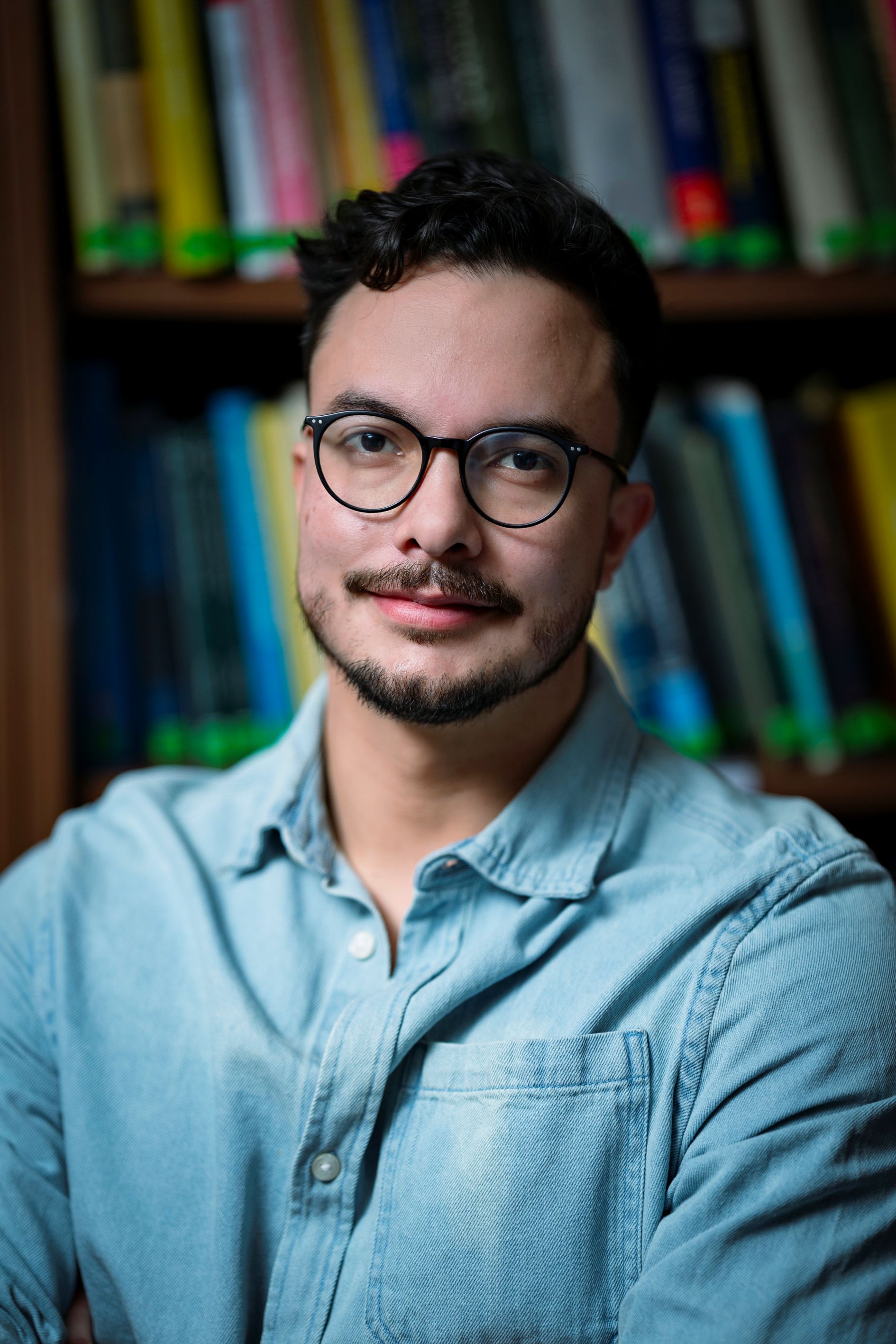
Camilo Cardenas Hurtado
https://www.lse.ac.uk/people/camilo-cardenas-hurtado
Dr. Camilo Cardenas Hurtado is currently an LSE Fellow in the Department of Statistics at the London School of Economics and Political Science (LSE). He received a PhD in Statistics from the LSE, working under supervision of Professor Irini Moustaki and Dr. Yunxiao Chen. Camilo's research focuses on methodological and computational developments of latent variable models, with applications in the social and behavioural sciences. He is interested in measurement problems, where the variables of interest are not observed. On the technical side, his work ties elements from stochastic and high-dimensional constrained optimisation, stochastic-approximation and regularisation techniques in marginal maximum likelihood estimation problems, distributional regression models, and semi-parametric regression models. Before transitioning into academia, Camilo was an Economist at Banco de la República (Colombian Central Bank), working on macroeconomic analysis and forecasting.